
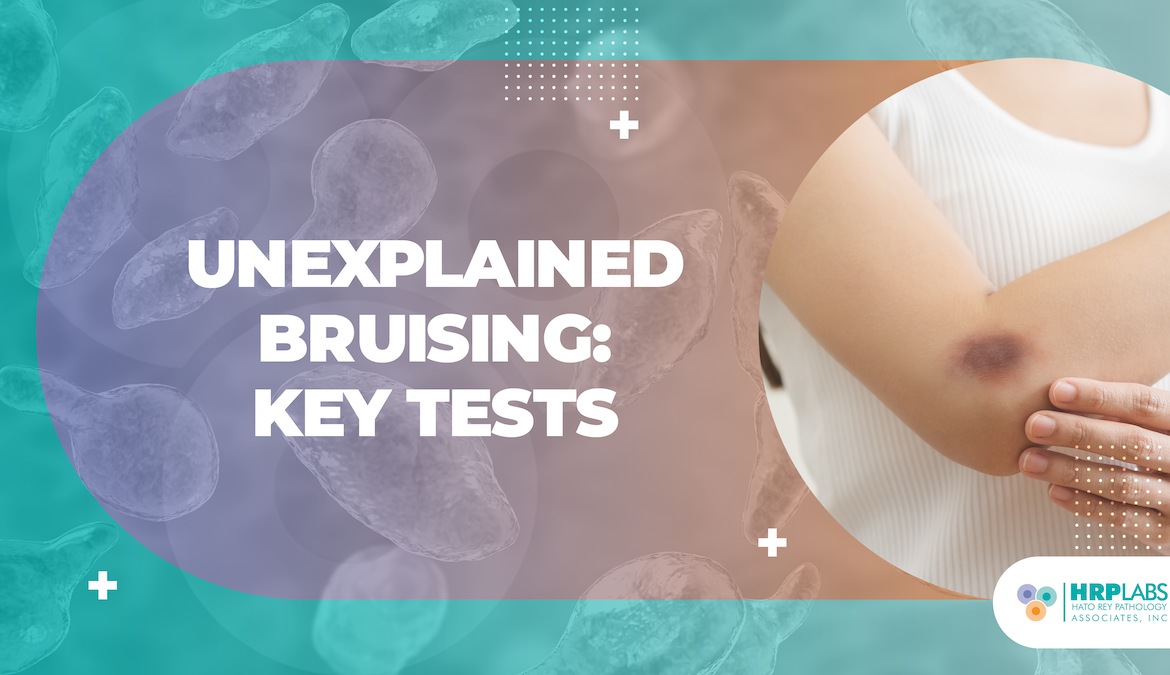
Many people become concerned when they start noticing bruises frequently or without an obvious injury. While some bruises are harmless, others can be a sign that something in the body isn’t functioning as it should. The good news is that several common causes can be identified through simple and accessible laboratory tests.
Why Do Bruises Happen So Easily?
Bruises form when tiny blood vessels break and blood becomes trapped under the skin. This can happen after minor bumps… but also due to medical conditions that affect:
- The number of red blood cells or platelets
- Blood clotting ability
- Liver function
- Levels of essential vitamins
- The elasticity or fragility of blood vessels
If you notice frequent, large, painful, or unexplained bruises, lab testing can provide valuable information.
Laboratory Tests That Can Help Identify the Cause
Below are the most common tests used to evaluate why bruises may be appearing repeatedly.
-
CBC (Complete Blood Count): Is There Anemia or a Platelet Issue?
A CBC is one of the most important tests in these cases.
It can detect:- Anemia (low red blood cell count)
- Thrombocytopenia (low platelets)
- Infections
- Blood abnormalities that affect clotting
-
Coagulation Tests: Is Your Blood Taking Too Long to Clot?
Prothrombin Time (PT) and Partial Thromboplastin Time (PTT) evaluate clotting ability.
They help detect:- Deficiency of clotting factors
- Hereditary or acquired clotting disorders
- Side effects of medications
- Liver problems that impair clotting
-
Liver Function Tests: When the Liver Plays a Role in Bruising
The liver produces many of the factors needed for proper clotting. If it isn’t working well, bruising may become more frequent.
A liver panel evaluates:- Bilirubin
- Liver enzymes (AST, ALT, ALP)
- Total proteins and albumin
-
Vitamin B12 and Vitamin D: The Role of Vitamins in Skin and Blood Vessel Health
Vitamin deficiencies are common and often underestimated causes of bruising, especially in women and older adults.
Low Vitamin B12 may cause:- Fragile capillaries
- Fatigue
- Pale skin
- Numbness or tingling
Low Vitamin D may affect:
- Skin health
- Healing
- Inflammation
Can vitamin deficiencies cause bruising?
Yes. Vitamins play a key role in blood health, skin structure, and vessel integrity. A blood test can confirm if they’re low.
-
Homocysteine: When Elevated Levels Affect Vascular Health
High homocysteine levels can weaken blood vessels, making them more likely to break easily.
This test is helpful in people with:- Family history of vascular issues
- B12 deficiency
- Folic acid deficiency
- Cardiovascular problems
When Should You Consider Getting Tested?
You should consider lab evaluation if you have:
- Recurrent bruising without a clear cause
- Large or painful bruises
- Frequent nosebleeds or bleeding gums
- Persistent fatigue
- Very sensitive skin
- Family history of clotting disorders
- Use of medications that affect the blood
These signs are valid reasons to seek guidance and perform basic lab studies.
Which Doctor Should Evaluate These Bruises?
The best place to start is with your primary care physician. They will review your symptoms, interpret your lab results, and determine whether you should see a specialist—such as a hematologist, hepatologist, or endocrinologist—depending on the suspected cause.
Take the First Step to Understand What’s Happening With Your Health
At HRP Labs, we have the experience, technology, and dedicated staff to provide accurate and responsible diagnostic results. Our tests can help you obtain key information about your health, but remember: proper interpretation and medical follow-up must be done with your primary physician or any specialist they recommend. They will evaluate your case comprehensively and guide you on the next steps based on your results.